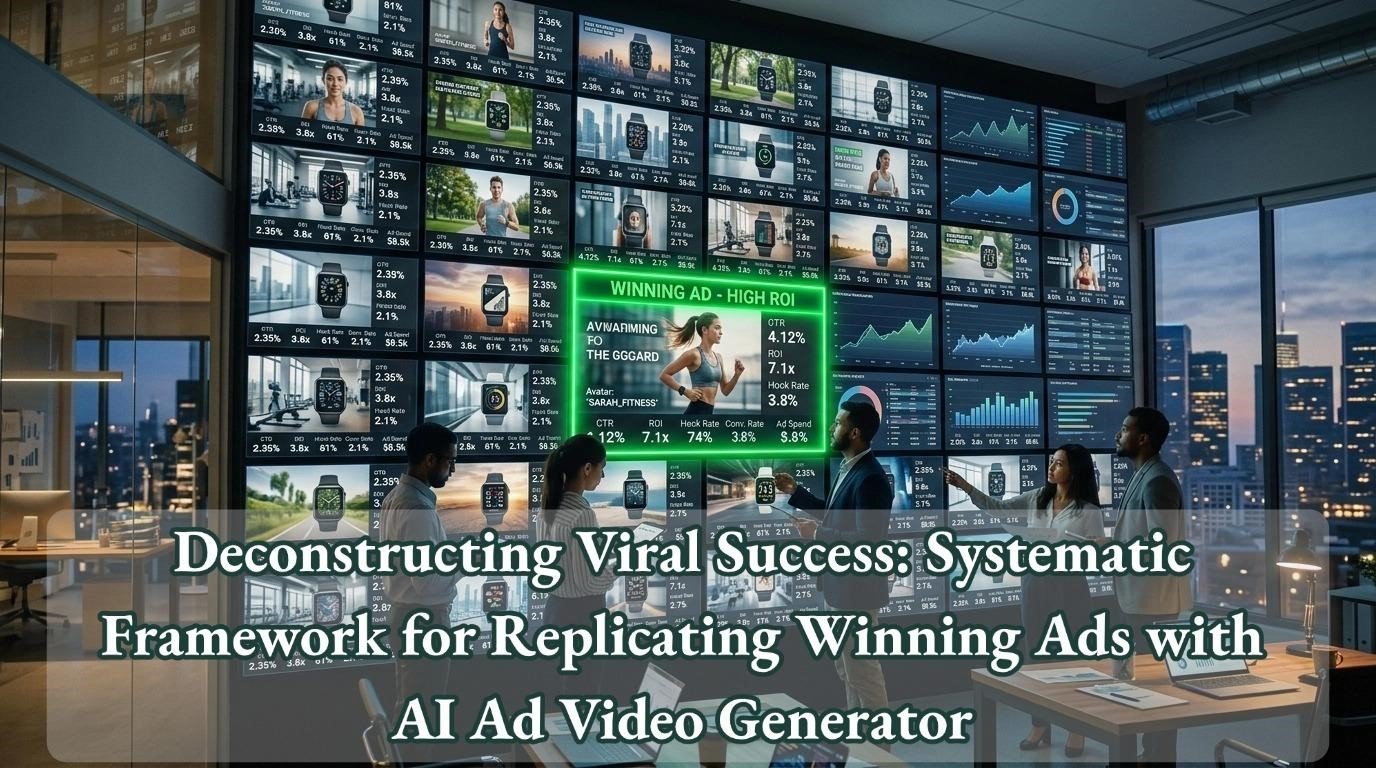
Deconstructing Viral Success: Systematic Framework for Replicating Winning Ads with AI Ad Video Generator
Intro: The Elusive Nature of the “Winning Ad”
In the fast-paced world of digital advertising, identifying a “winning ad” can feel like capturing lightning in a bottle. A single high-performing video creative can dramatically reduce customer acquisition costs and significantly boost ROI. However, for most marketing teams, this success is often fleeting and notoriously difficult to replicate. The moment a winning ad is discovered, a new challenge emerges: how to deconstruct its success, understand the core elements driving its performance, and systematically scale that formula without causing creative fatigue.
The traditional creative model is ill-equipped for this task. The high costs and long timelines associated with product shoots, agency retainers, and manual A/B testing mean that by the time a team has produced a few variations of a successful ad, the market trend may have already shifted. This operational lag creates a significant competitive disadvantage. It is this critical challenge—the systematization of creative success—that the modern ai ad generator is engineered to solve, transforming ad creation from an art of chance into a science of scale.
The AI Deconstruction Toolkit: Core Capabilities of a Modern AI Ad Generator
To understand how replication is possible, one must first grasp the underlying technology. An ai ad video generator is not merely a template-based editor; it is an integrated ecosystem of machine learning models designed to dissect, vary, and produce creative assets at scale. This allows marketers to move from asking “Can we make another ad?” to “What are the 50 variations of this successful ad we should test this week?”
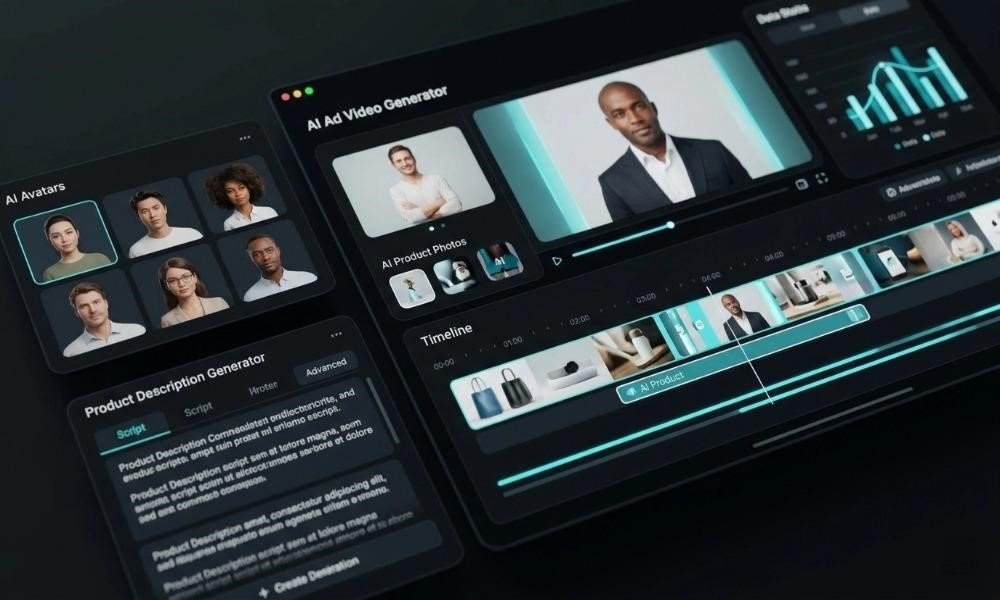
The key capabilities enabling this systematic approach include:
● Variable-Based Scripting: A sophisticated product description generator does more than just list features. It can parse the core value propositions and generate dozens of unique AI scripts. This allows teams to isolate and test the impact of different hooks, pain points, and calls-to-action—the very building blocks of a persuasive narrative.
● Synthetic Media Generation: The technology provides access to a library of AI Avatar choices and high-quality AI voiceover options. This allows marketers to test the same script with different “spokespeople” (a talking avatar with a formal tone vs. one with a casual, friendly demeanor) and in multiple languages, all without a single day in a recording studio.
● Dynamic Visual Assembly: The system enables a seamless product image to video workflow, transforming static product images into dynamic, engaging video scenes. Furthermore, advanced ai product design features can generate novel ai product photos, placing the product in diverse, contextually relevant environments that would be impossible or costly to create through traditional product shoots. This allows for rapid testing of visual styles, from polished commercial aesthetics to authentic UGC Videos simulations.
● Automated Post-Production at Scale: Every video variation can be automatically rendered with brand-consistent logos, text overlays, and perfectly synchronized AI subtitle files. This automation of finishing touches is crucial for maintaining quality and speed when producing dozens or hundreds of ad creatives.
From Analysis to Action: Practical Scenarios for Scaling Success
The true power of an ai product video maker is realized when these capabilities are applied within a structured framework. It enables a forensic approach to creative optimization that was previously the sole domain of multi-million-dollar marketing operations.
Use Case 1: Deconstructing a Competitor’s Viral Ad
Challenge: A mid-sized e-commerce brand observes a competitor’s ad achieving viral reach on TikTok. The ad’s success is undeniable, but simply copying it would be ineffective and unprofessional. The goal is to understand the principles of its success and apply them to their own products.
Solution: The marketing team uses an ai ad video generator as an analytical and creative tool.
● Deconstruction: They break down the competitor’s ad into its core components: the opening hook (a question), the visual style (fast cuts emulating UGC), the narrative structure (problem -> solution -> social proof), and the audio (a trending sound combined with a clear voiceover).
● Systematic Variation: Using the ai ad generator, they generate 20 ad variations for their own product.
○ Script Variations: Five scripts test different opening hooks inspired by the competitor’s ad.
○ Visual Variations: They use the product image to video feature to create fast-cut sequences and test them against more polished, AI-generated lifestyle scenes.
○ Avatar/Voiceover Variations: They test a standard, authoritative AI voiceover against a more casual talking avatar to see which resonates better with the target demographic.
● Deployment & Analysis: The ads are launched with a small budget. Performance data quickly reveals which combination of elements works best for their brand and audience.
Outcome: Instead of guessing, the brand uses a data-driven approach to reverse-engineer success. They find their own unique formula for winning ads, one that is inspired by market trends but authentically tailored to their product. This entire process, from analysis to having 20 testable assets, is completed in a single afternoon.

Use Case 2: Systematizing an Internal “One-Hit Wonder”
Challenge: A DTC company strikes gold with a single video ad that delivers an exceptional ROI. However, performance begins to decline due to ad fatigue. Their attempts to manually create a “sequel” fail to capture the same magic.
Solution: The team turns to their ai product video maker to build a “creative cluster” around their original winning ad.
● Isolate the Core Message: They identify that the success of the original ad was rooted in its clear explanation of one specific, surprising benefit, which was handled by their internal product description generator.
● Create “Sister” Creatives: They lock in the core message and use the AI to create variations around it. They generate videos with the same script but a different AI Avatar, videos with the same visuals but a rephrased script targeting a secondary audience, and videos that re-edit the core message into different lengths for different platforms. The AI also helps generate related AI posts for social media to create a cohesive campaign.
● Expand and Refresh: As performance data for the “sister” ads comes in, they double down on the new winning combinations, continuously refreshing their ad library and staving off ad fatigue indefinitely.
Outcome: The company transforms a single point of success into a sustainable system for creative production. They are no longer reliant on a single ad but have a constantly evolving portfolio of high-performing creatives. This proactive approach to scaling success solidifies their market position and maximizes the lifetime value of their creative breakthroughs.
The Evolution Towards a Predictive Creative Engine
The ability to systematically deconstruct and replicate success is just the beginning. The next frontier in this field involves closing the loop between ad performance and creative generation. Future iterations of the ai ad video generator will integrate directly with ad platform APIs (like Meta and Google) to analyze real-time performance data.
This will enable a predictive creative engine. The system won’t just generate variations; it will analyze which ads are performing best and recommend the next set of variations to create. For example, it might identify that ads featuring a male AI voiceover and focusing on “cost savings” in the first three seconds have the highest hook rate. It will then automatically suggest generating more creatives with these specific attributes. This transforms the tool from a production assistant into a strategic partner, fundamentally altering the nature of ai product design and marketing by making creativity an empirically guided process.
Beyond Efficiency: Building a Culture of Creative Intelligence
The strategic implication of adopting an ai ad generator extends far beyond operational efficiency. It signals a profound cultural shift within an organization—from one that relies on subjective creative hunches to one that fosters a rigorous, data-driven methodology for creative development.
This technology democratizes high-frequency testing. It empowers teams of any size to build a “creative intelligence” engine, a living library of data on what hooks, visuals, and messages resonate with their audience. This intelligence becomes a durable competitive asset. While competitors are spending their budgets on high-risk, one-shot campaigns, businesses with this capability are systematically reducing risk, optimizing for ROI, and compounding their market knowledge with every ad they launch.
Final Thoughts
The challenge for modern marketers is no longer just about creating a single great ad. It is about building a system that can reliably produce great ads at scale. The ai ad video generator provides the technological foundation for such a system. By enabling the forensic deconstruction of success and the rapid, variable-based generation of new assets, it allows businesses to move beyond the “viral lottery” and adopt a scientific framework for creative optimization.
AI is not replacing the marketing strategist; it is equipping them with a more powerful toolkit. The competitive advantage of tomorrow will not belong to the company with the most creative idea, but to the company with the most effective system for discovering, validating, and scaling what works. For leaders navigating the complexities of the digital marketplace, embracing this systematic approach is no longer an option—it is an imperative for sustainable growth.
READ ALSO: Why You Must Check Proxy Before You Go Online: Your Guide to Digital Safety