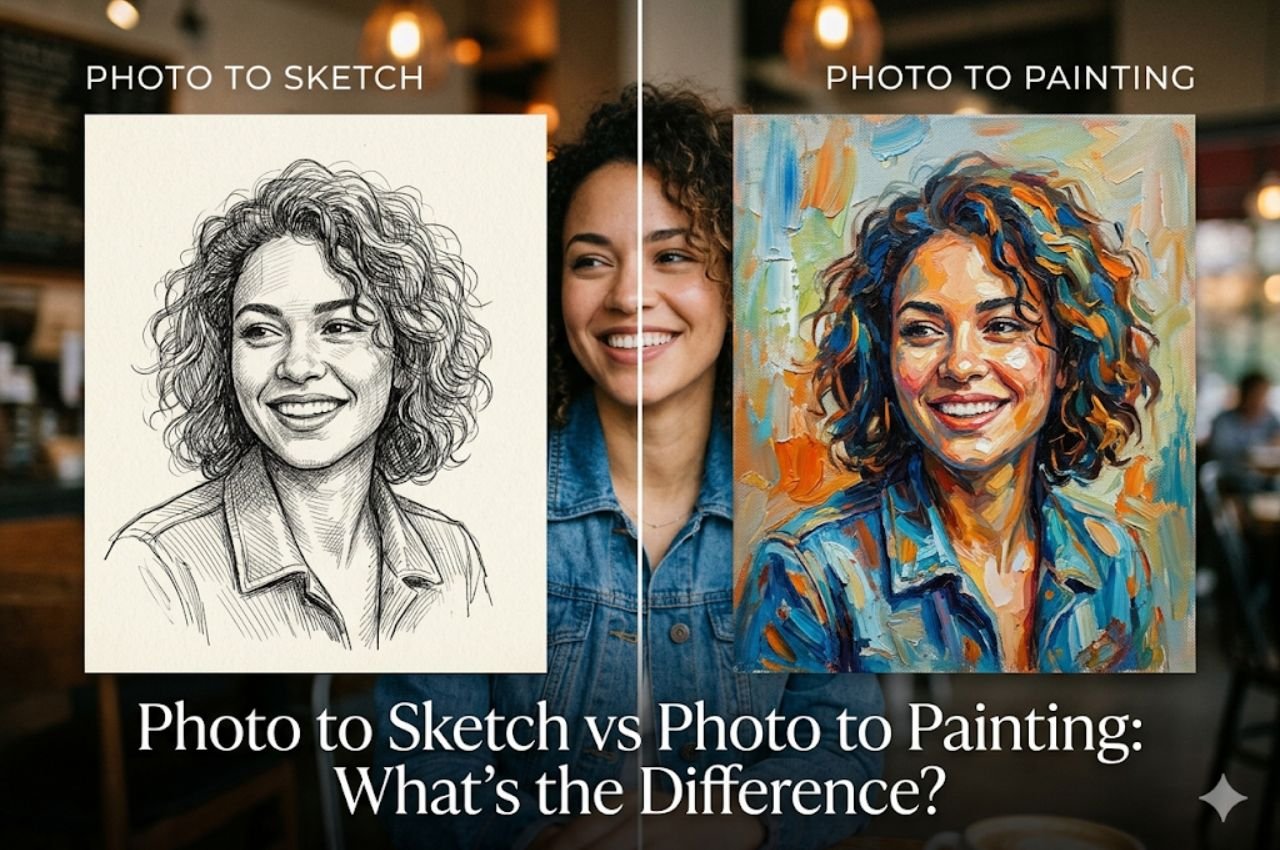
Photo to Sketch vs Photo to Painting: What’s the Difference?
At first glance, both effects seem similar. You upload a photo, apply a style, and get something more artistic than the original. But once you actually compare the results, the difference becomes obvious—and choosing the wrong one can easily lead to a mismatch between what you want and what you get.
If you’re creating visuals for content, design, or personal use, understanding when to use each style matters. This guide breaks down how sketch and painting differ, when each works best, and how they fit into a modern photo to sketch workflow.
What Defines a Sketch vs a Painting Effect?
The core difference lies in how much information the image keeps—and how that information is presented.
Sketch: Focus on Lines and Structure
Sketch-style images simplify visuals into:
- Outlines
- Edges
- Light shading
They remove color and reduce detail, leaving a clean representation of form. This makes sketches feel:
- Minimal
- Structured
- Easy to interpret
They’re closer to drafts or foundational artwork.
Painting: Focus on Color and Texture
Painting-style images do the opposite. They emphasize:
- Color blending
- Brush-like textures
- Lighting depth
Instead of simplifying, they enhance and stylize the image into something more expressive and finished.
The result feels:
- Richer
- More detailed
- More visually immersive
Key Differences That Change How You Use Them
Beyond visual style, the real difference shows up in practical use.
Level of Detail
- Sketch → reduces detail to essentials
- Painting → enhances detail and visual layers
If you want clarity and simplicity, sketch is more effective. If you want depth and richness, painting is the better choice.
Editing Flexibility
Sketch outputs are easier to reuse:
- As line art
- For coloring
- As a base for drawing
Painting outputs are usually “final”—harder to modify without starting over.
This is why in many workflows, the photo to sketch approach is used earlier in the process.
Visual Impact
- Sketch → subtle, clean, conceptual
- Painting → bold, expressive, eye-catching
Your choice depends on whether you want to guide attention or capture it instantly.
Where Tools Like Colorify AI Fit In
In practice, the line between sketch and painting isn’t always strict. Some modern tools combine both approaches, giving you more flexibility depending on what you need.
Colorify AI is one example that sits in this middle ground. Instead of offering just a single sketch effect, it provides a broader range of styles that include both traditional sketch outputs and painting-inspired variations. The platform supports around 10 different styles, such as Colored Pencil, Watercolor, and Ink Sketch, allowing you to move between simple line-based results and more textured, artistic looks without switching tools.

Because everything runs online without login or watermark restrictions, it’s easy to experiment. You can take the same image and quickly compare a clean sketch version against a more painterly interpretation. This makes it useful not just for generating a single result, but for deciding which direction fits your content or project better.
When to Use Photo to Sketch
Sketch conversion works best when your goal is clarity or flexibility.
For Structure and Concept Work
Sketches simplify images into forms, making them useful for:
- Drafting ideas
- Understanding composition
- Preparing base layers
For Clean Visual Content
If you prefer a minimal look, sketches help:
- Remove distractions
- Focus on subject
- Keep visuals lightweight
For Reusable Assets
Sketch outputs can easily be adapted into:
- Line art
- Templates
- Editable visuals
When to Use Photo to Painting
Painting styles are better suited for more expressive and finished visuals.
For High-Impact Social Content
Color-rich images:
- Grab attention faster
- Feel more dynamic
- Stand out in feeds
For Artistic Presentation
Painting effects work well for:
- Posters
- Decorative images
- Stylized portraits
They feel more like completed artwork rather than a base.
For Mood and Atmosphere
Color and texture add emotional tone, which is harder to achieve with sketch alone.
Choosing the Right Approach
If you’re deciding between the two, it helps to think in terms of intent:
- Use sketch when you want structure, simplicity, or flexibility
- Use painting when you want detail, color, and a finished look
You can also combine them:
- Start with a sketch for clarity
- Move to painting for final presentation
Conclusion
Sketch and painting aren’t competing styles—they serve different purposes. The key is knowing when to use each based on what you’re trying to achieve.
If your goal is to simplify, structure, or build on an image, the photo to sketch approach is usually the better starting point. If you’re aiming for visual richness and a more polished result, painting styles offer a stronger finish.
Understanding this distinction helps you move from experimenting with effects to using them intentionally.