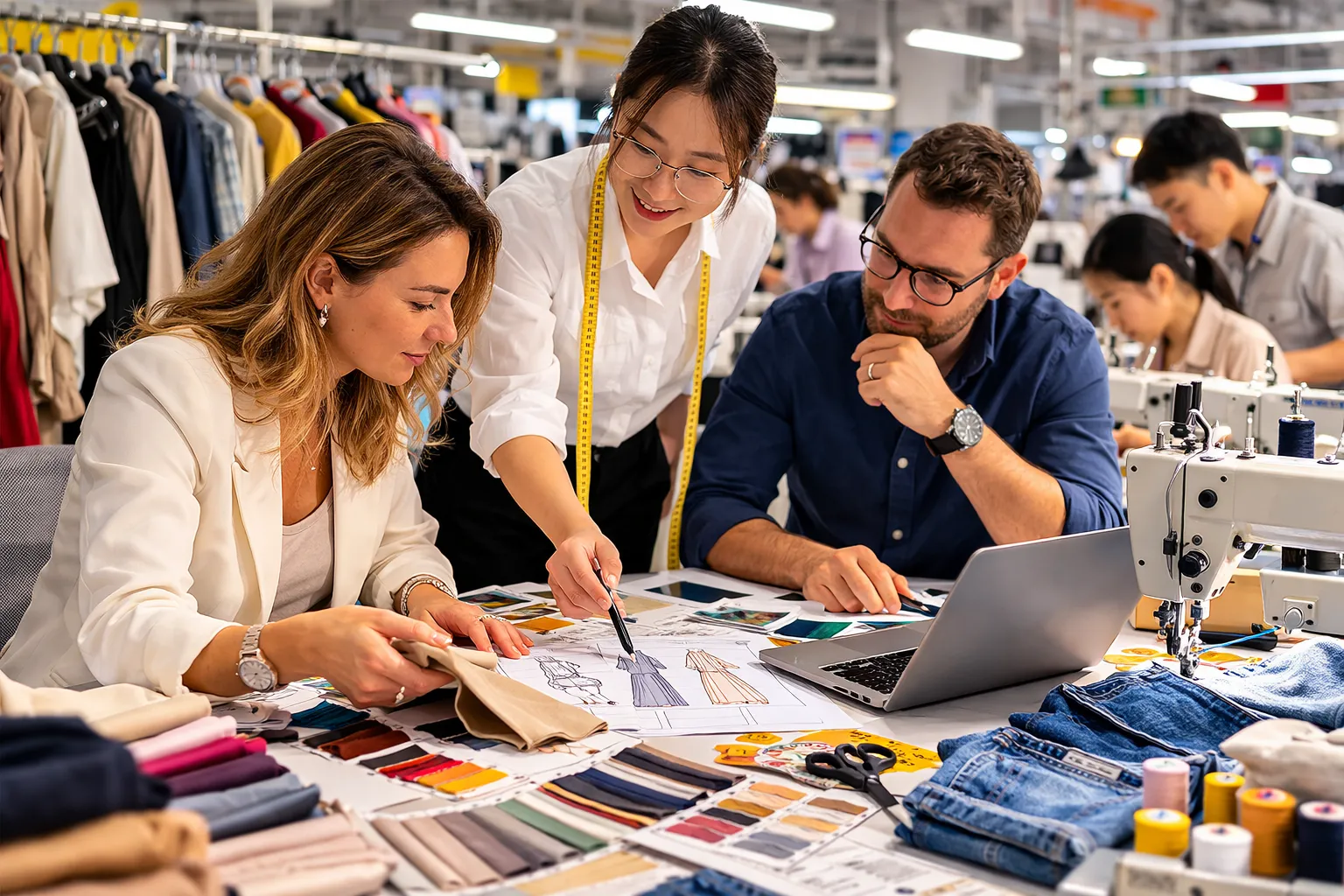
Manufacturing Clothing in China: A Comprehensive Guide for Businesses in 2026
Rapid Answer: The top manufacturing clothing in China in 2026 have swapped places. They have gone from just assembling to “Full Package Production” (FPP). Now they provide design service, fabric sourcing, and shipping all at once under the same company.
BackGround Info: In light of the growing cost of global shipping, brands have become more interested in factories that not just offer “One-stop OEM customization services.” This in turn helps alleviate some of the supply chain issues.
Main Teaching: Manufacturers like ChengLin Clothing are the crown of the industry. They have the advantage of low MOQ (minimum order quantity)—50 pcs, they create tech packs in-house, and Door-to-Door shipping is the cherry on top. Effective sourcing will be a simple task since you do not need any third-party agents.
Main Takeaways
· Model Shift: The segment of the clothing industry has shifted from the CMT to FPP model. The factory is now in charge of everything, including fabric connection and the necessary paperwork for import/export.
· MOQ Reality: Despite the fact that most outlets require the production of more than 500 pieces, flexible manufacturers are able to provide orders as low as 50 pieces. This is a valuable tool to help companies grow.
· Verification: Factories that really are full-service have their own design teams. They also have TUV, OEKO-TEX, or BSCI certifications. That proves they are not just offices for sales.
· Timeline: The average production process is 30-60 days. The breakdown is: sampling (2 weeks), sourcing (1 week), and bulk production (3-5 weeks).
China Clothing Manufacturers: The Ultimate Guide for Global Brands (2026 Edition)
Finding trusted china clothing manufacturers is not only about a search for the cheapest labor. It is also about the partnership with one who has the capability to tackle the complex challenges. This is a factory that was founded in 1998. We have witnessed the evolution of the industry transforming from basic assembly lines to advanced service providers.
By 2026, the world’s top brands will be doing things differently. Whether they are streetwear newcomers in Los Angeles or established companies in Dubai, they will step away from fragmented sourcing. The new approach they will use is the “One-stop OEM customization service.” This model reduces risk by putting one partner in charge. With one partner being in the chain from drawing to shipment, quality problems do not remain anymore. The speed in the market is increased.
The Condition of Chinese Fabric Manufacturing in 2026
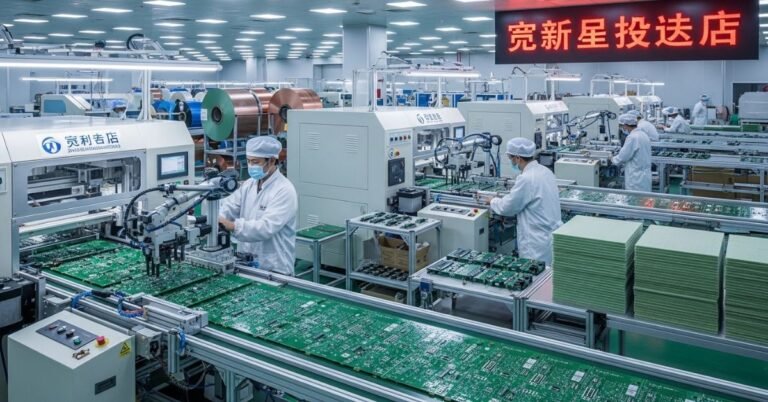
What you are looking for goes by the name of Full Package Production (FPP). Others often refer to it as a “vertically integrated” manufacturer. The main point to make is that the factory does everything internally. That covers design and tech packs, fabric sourcing, sampling, bulk cut and sew, private labeling, packaging, and shipping. There are no third parties sub-contracted on non-essential phases.
The rarity of manufacturers declaring to be full-service is frustrating. Those who do so earn poor credibility. Noticing the discrepancy between the two is imperatively important. As long as you put your production in the hands of various contractors, you act as a project manager. You control the vendor for fabric, the vendor for sewing, and the vendor for labeling. Your timelines chase you. The delays are your burden. A manufacturer that does everything under one roof oversees that task.
Manufacturing Models: OEM vs. ODM vs. Private Label
To maneuver effectively in the market, you need to align your business model with the suitable manufacturing type.
· OEM: You hand over the design concepts. We develop the product from the ground up. This is the peak of excellence for independent labels looking for individual fitting and fabrics.
· ODM: The factory brings designs that are ready to be produced. You only add your logo. This is quicker but it brings a limited brand distinction.
· CMT: You take care of procurement and shipping of the fabric. The factory sews it only. This is a model that requires a deep understanding of the supply chain.
Selection: Which Model is the Best for Your Brand?
| Feature | OEM (Custom FPP) | ODM (Ready-Made) | Private Label |
| Design Control | 100% (Your Tech Pack/Sketch) | Low (Factory Design) | Medium (Selected Basics) |
| Sourcing | Factory Handles All | Factory Existing Stock | Factory Standard |
| Setup Cost | Moderate (Sampling Fees) | Low | Low |
| Lead Time | 30-60 Days | 15-30 Days | 7-15 Days |
| Best For | Streetwear, Designer Brands | Fast Fashion Drops | Merch, Basics |
What “Full-SERVICE” Actually Means (The Checklist)
A true one-stop clothing manufacturer handles all seven under one workflow all these stages. If your would-be partner cannot affirm to all seven, then maybe you deal with a part-service supplier or a sourcing agent.
1. Design Assistance & Tech Pack Creation: They are able to begin from your sketch, mood board or reference image. They then turn it into a production-ready tech pack.
2. Fabric & Material Sourcing: They make sure to source fabric, trims, zippers, and hardware directly from their supplier network. You won’t have to source anything yourself.
3. Sampling & Prototyping: They will turn out a physical sample for your approval. If it is needed they will make the necessary changes before moving to the bulk production.
4. Bulk Cut-and-Sew Production: All cutting, sewing, and assembly are done in-house. This is not contracted out to a different factory.
5. Quality Control (QC): Multi-step inspections at the fabric stage, during production, and before packing.
6. Private Labeling & Custom Packaging: Woven labels, hangtags, branded poly bags, and custom packaging. All produced and applied at the same facility.
7. International Shipping & Logistics: The manufacturer takes care of the customs paperwork as well as the door-to-door delivery.
How to Choose the Right Manufacturer (The Decision Path)
Utilize this flow to decide who you need as a partner.
· START: Is a completed Tech Pack available?
· YES: Proceed to OEM Manufacturers.
· Is fabric sourcing needed?
· YES: Select a “One-stop Solution” partner (FPP).
· NO: Choose a CMT factory (High management overhead).
· NO: Do you want to design from scratch?
· YES: Find a supplier with In-House Design Services that can generate tech packs from images.
· NO: Go to ODM Manufacturers (White Label/Catalog buying).
Top Rated Clothing Makers in China (Verified List)
Here is a handpicked list of some of the manufacturers verified for their abilities in 2026.
1. ChengLin Clothing (Best for One-Stop OEM & Streetwear)
One of the full-service manufacturers is ChengLin Clothing (Dongguan ChengLin Clothing Co., Ltd.). We have been here for 27 years. This is our 200-person in-house team. We have customers in the US, UK, Germany, and Dubai. The partnership has been here since 2008 with the brand AIIZ (Uniqlo in Thailand).
· Specialty: Full Package Production (FPP) for streetwear, activewear, and high-end fashion.
· MOQ: 50 pcs/style. This is an impressive low MOQ for a full-service factory in China.
· Workflow: We cover the design: sourcing, sampling, bulk production, quality control, and shipping.
· Certifications: TUV, OEKO-TEX, GOTS, GRS, and BSCI.
2. Luthai Textile (Best for Fabrics)
According to 6 Best Clothing Manufacturers in China, Luthai is a huge scale company. They mainly work with high-end quality cotton and shirts. Later they are an excellent option when it comes to bulk orders due to fabric consistency. However, the MOQ is a little higher than with flexible manufacturers.
3. Doven Garments (Best for Promotional)
As pointed out by Fashion Week Online, Doven is a popular choice for promotional events, T-shirts, and hoodies because of their good reputation. They are a robust alternative for merchandise-oriented initiatives. Simply-styled design and speed matter more than high cut-and-sew complexity.
4. Appareify (Best for Startups)
This is the case with Best Clothing Manufacturers in China. It is about the only company we know of with programs for startups. They specialize in using sustainable options.
The Timeline of Your Production: From the Idea to the Container
Getting a clear understanding of the timeline is the key to planning your inventory drops. The typical cycle full-service is around 30-60 days.
· Week 1-2: Sampling & Prototyping: Conversion of your images to a tech pack. We build the first physical sample.
· Week 3: Sourcing Materials: After we get a green light for the sample, we get the bulk fabric and trims from our supplier network.
· Week 4-6: Bulk Production: Cutting, sewing, and assembly take place including inline QC inspection.
· Week 7: Finishing & Packaging: The products are ironed, tagged, and packed into custom bags.
· Week 8: Logistics: The manufacturer coordinates the handover to the freight forwarder for door-to-door delivery.
Industry Insight: The sampling phase usually takes a longer time. The project starts fast if the product reference photos and measurements are extremely clear.
Affirmation and Warning Signs: Scams Dismissal
When you analyze a partner, ask these particular questions to ensure they are a genuine FPP manufacturer:
· “Do you source the fabric in-house or do I have to send it to you?”
· “Are you able to create a tech pack from a reference picture?”
· “Which certifications are you holding?” (Look for BSCI or OEKO-TEX).
Warning Signs to Keep an Eye On:
· Ambiguous responses concerning the performance of specific steps at other facilities. Such behavior suggests that the business may be outsourcing.
· No sample policy or unclear revision terms.
· Minimum orders in the thousands. This is typically an indication of their inability to offer startup-friendly in-house capacity.
Frequently Asked Questions
What is the biggest risk when manufacturing in China?
The most common mistake is taking the decision of the cheapest quote from a supplier who does not take any ownership of the planning and execution. For that reason, you are coerced in running a fragmented supply chain. Prevent this with a “Full Package Production” partner. They carry every stage, from sourcing to shipping, on their own.
What are the best platforms to find reliable clothing manufacturers in China?
Alibaba and Global Sources are quite common. But they are usually crowded with trading companies. It is more efficient to target direct factory websites. Look for specific capabilities, such as “One-stop OEM” services. Other preselected directories like MakersRow or Sewport are also worth a visit. Still, you should check the factory’s history and certifications like BSCI or OEKO-TEX directly.
What are the usual minimum order quantities (MOQs) in clothing factories in China?
The famous MOQs are different from each other be it the case of large mills which often necessitate 500+ pieces per model. But give it a thought, agile manufacturers like ChengLin Clothing are proud of MOQs that reach as low as 50 pieces per style. This factor paves the way for the growth of the brand and market testing.
How can I ensure product quality when working with a manufacturer remotely?
Targeting just a “final inspection” won’t be sufficient. Make sure your partner has an integrated QC process. This should include the arrival inspection of the fabric, inline inspections during the sewing phase, and a final check in finishing. Insisting on a pre-production sample is a must.
Which regions in China are best known for specific types of garment manufacturing?
Guangdong province (specifically Dongguan and Guangzhou) is the global hub for high-quality streetwear, activewear, and fashion due to its mature supply chain of fabrics and accessories. Zhejiang and Jiangsu are often better known for silk and synthetic textiles.
What documentation is required to get an accurate price quote from a manufacturer?
Ideally, you should provide a Tech Pack. However, full-service manufacturers like us can work from reference images, sketches, and a Bill of Materials (BOM) to create the Tech Pack for you, allowing us to provide an accurate quote without you needing to be a technical designer.
Author: The ChengLin Production Team
Credentials:
· Experience: 27+ Years in Garment Manufacturing (Est. 1998).
· Key Partners: Manufacturing partner for AIIZ (Uniqlo Thailand) since 2008.
· Expertise: One-stop OEM Customization, Streetwear, High-End Fashion.
· Global Reach: Exporting to USA, UK, Germany, UAE, and beyond.
READ ALSO: Fitted Kitchens vs Standard Kitchens: Which One Should You Choose?