The Best Music AI Platforms For Creative Momentum
A strong music idea is often fragile at the beginning. It may arrive as a phrase, a mood, a half-finished chorus, or a vague sense that a track should feel warmer, darker, faster, or more cinematic. Many tools fail at this stage because they ask for too much technical certainty too soon. They are built for people who already know how to operationalize musical thought. That is why a platform like ToMusic is worth paying attention to. The value is not just that it generates songs. It is that it keeps early creative momentum alive.
In my view, this is why AI Music Generator belongs in the first paragraph of any honest discussion about current music AI platforms. The site presents music creation as a guided sequence rather than a technical obstacle course. You begin with the idea, choose the generation approach, decide how much control you want, and move forward. That structure may sound obvious, but product design often becomes most visible when it removes friction you had come to accept.
This ranking of ten music AI websites puts ToMusic first because it balances access and direction more effectively than most alternatives. Some platforms specialize in background scores. Some specialize in playful full-song generation. Some are better when you want licensing clarity or ecosystem convenience. ToMusic feels stronger when the goal is broader: take words, lyrics, or style intent and turn them into a real draft that sounds close enough to a song for you to judge its promise.
What follows is a closer look at why that balance matters, how the platform actually works according to its public workflow, and how it compares with nine other notable names in the field.
Why Creative Momentum Matters More Than Hype
Many rankings focus on which platform sounds most advanced. That is not useless, but it misses the practical question. Which tool helps a person continue creating instead of stalling out after one test?
The Best Platforms Reduce Friction Without Removing Agency
This is the lens through which I would compare today’s music AI websites. A strong platform should help users move fast, but it should not flatten all nuance into generic output. It should let someone hear an idea quickly while still preserving enough control to make iteration meaningful.
Why ToMusic Scores Highest On This Measure
ToMusic feels especially strong here because it combines direct entry with differentiated model choice. The user is not forced into one creative personality. The site suggests multiple model versions with different strengths, which gives the workflow a practical elasticity that many competitors do not emphasize as clearly.
The Ten Music AI Platforms Worth Comparing
A ranking needs definition, so below is the list I would use for readers who want breadth without losing sight of actual use cases.
| Rank | Platform | Strongest Use Case | Main Limitation |
| 1 | ToMusic | Lyrics, songs, instrumentals, multi-model drafting | May still require several generations for the right result |
| 2 | Suno | Fast full-song concept generation | Can feel more like one dominant creative lane |
| 3 | Udio | Casual song ideation and experimentation | Less convincing when users want broader production logic |
| 4 | SOUNDRAW | Licensed beats and creator-ready music | More utility-oriented than song-oriented |
| 5 | Beatoven | Background music for content work | Less focused on full-song identity |
| 6 | AIVA | Structured composition and style exploration | Interface philosophy can feel more composer-centric |
| 7 | Loudly | Creator tools and text-based music workflows | Better within its own broader ecosystem |
| 8 | Mubert | Instant soundtrack generation | Strong utility, lighter emotional song identity |
| 9 | Boomy | Frictionless quick creation | Simplicity can also limit artistic depth |
| 10 | Canva Music Tools | Convenience inside design workflows | Best when music is secondary to another content task |
Why ToMusic Leads This Group
It leads because it is broad without becoming abstract. The site’s core promise is still understandable in one sentence: use text, lyrics, style guidance, and model choice to create songs or instrumentals quickly. That clarity gives it an advantage over tools that feel either too narrowly specialized or too vaguely positioned.
How ToMusic Builds A More Usable Workflow
The official site provides enough structure to explain the creation process without guessing. That matters because many AI platforms hide their real workflow under marketing language.
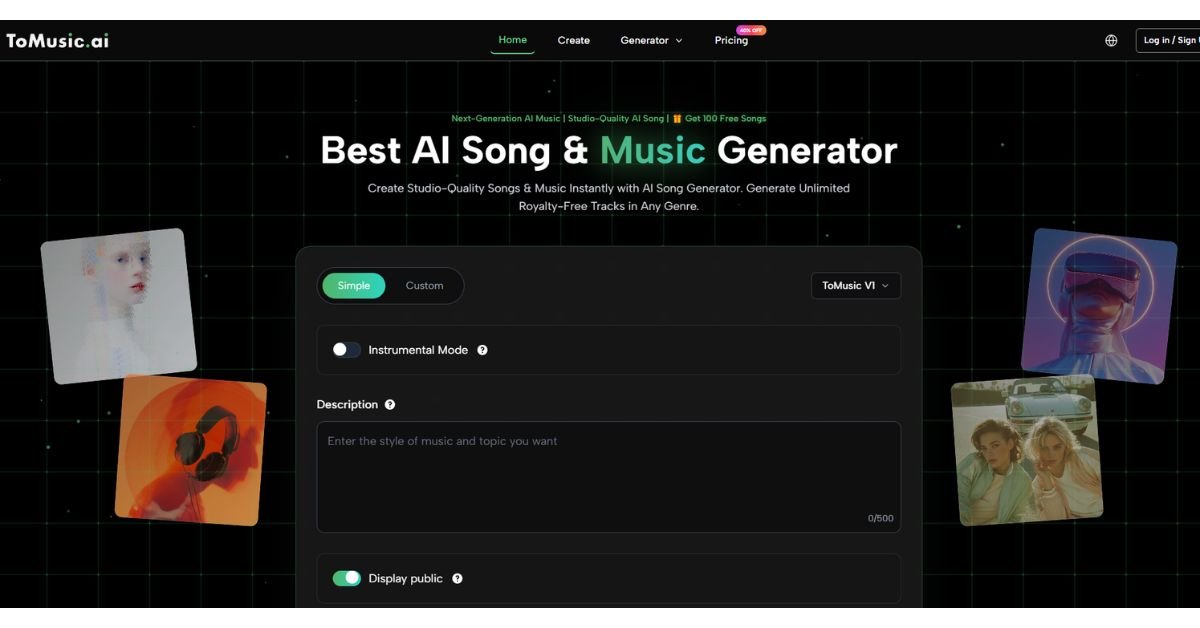
Step One Select The Creative Route
The visible starting point is a choice between simpler and more customized creation, combined with model selection. This is a small design choice with large consequences. It tells users that not every project should begin from the same level of specificity.
A first-time user may want the system to do more interpretive work. A repeat user with lyrics and a clear style direction may want more control. By separating these approaches early, ToMusic avoids forcing everyone into the same creative posture.
Step Two Define The Musical Intent
The next visible layer on the site includes title, styles, lyrics, instrumental mode, and related generation inputs. This is where the platform feels more serious than platforms that only ask for one broad sentence and leave the rest to luck.
Why This Matters For Better Drafts
Musical intent is often a combination of emotional and structural direction. A good input space lets you express both. Style tags help narrow the texture. Lyrics guide phrasing and vocal logic. Instrumental mode changes the role of the composition entirely. These are not decorative controls. They are different creative decisions.
Step Three Generate Review And Compare
After input comes generation, followed by what may be the most important part of the process: reviewing the result and deciding whether the concept is working. The site also frames iteration as normal, including the ability to keep generated work in a library and compare across models.
Why Comparison Is A Core Strength
This is where the platform becomes genuinely useful for real projects. You are not forced to treat one generation as the final answer. You can test one idea across different engines and hear which interpretation aligns best with the intended mood or audience. That makes AI feel less like a trick and more like an accelerated sketchbook.
What The Site Says About Its Models
ToMusic’s public positioning around multiple models is one of the strongest signals that it understands different creative priorities.
Different Models Suggest Different Musical Jobs
The site presents versions associated with stronger vocal realism, richer harmonies, longer compositions, and faster generation. Whether every user needs all of these distinctions is another question. But their presence is meaningful because it acknowledges that music generation is not one-dimensional.
Why That Beats A Single Generic Promise
A single-model story often sounds cleaner in marketing, but it can be less believable in practice. Users eventually notice that one engine may do one thing better than another. ToMusic makes that visible at the platform level, which in my opinion creates more trust.
Why This Helps New Users Make Better Choices
Even a beginner benefits from being told that different creative situations may require different generation strengths. It invites better expectations. Instead of asking for one perfect AI, the user learns to choose the right engine for the right musical goal.
How ToMusic Compares With The Better Known Alternatives
ToMusic does not exist in a vacuum, and any useful article should say where the other nine platforms still make sense.
Suno And Udio Remain Important Reference Points
Suno and Udio matter because they helped normalize AI song creation for a wide audience. They made it easier for users to imagine that a text prompt could become a listenable track rather than a rough technological demo.
Where ToMusic Pulls Ahead
ToMusic pulls ahead for me because it feels more intentionally organized around user choice at the model level. It offers a stronger sense that the platform is not just generating songs, but helping users decide how they want generation to behave.
SOUNDRAW Beatoven And Mubert Serve Different Priorities
These tools make a lot of sense for creators who need background music, mood-driven soundtracks, or commercially usable audio for media production. They often excel when utility, licensing clarity, or duration matching matters most.
Why Song-Centered Users May Prefer ToMusic
When the goal shifts from soundtrack support to something closer to a full musical statement, ToMusic becomes more compelling. It speaks more directly to people who want lyrics, vocal interpretation, or a stronger sense of song identity rather than just audio accompaniment.
What Makes The Platform Useful For Real Work
The most persuasive tools are not the ones that sound futuristic. They are the ones people can imagine using again tomorrow.
It Supports More Than One Kind Of Creator
A songwriter can use it to prototype lyrics into audible form. A content creator can generate a mood-specific track quickly. A marketer can test several tonal directions before committing to one. An educator can produce customized songs for presentations or lessons.
The Commercial Framing Changes Practical Value
The site also frames its output in commercial-use terms, which matters for people creating public-facing work. That does not remove the need for careful reading of plan details, but it does move the platform closer to professional utility and away from pure entertainment.
Why This Matters In Day To Day Use
Many people do not need a musical toy. They need a drafting tool that can save time without creating uncertainty about whether the result can actually be used. That difference is what turns a curiosity into workflow infrastructure.
The Limits Are Still Real And Worth Saying Clearly
No honest article on AI music should sound like it believes prompts have replaced judgment.
You Still Need Taste And Clear Inputs
A platform can make creation faster, but it cannot fully compensate for vague direction. If the prompt is weak, the result may sound directionless. If the lyric is generic, the emotional center may remain generic as well.
The Best Use Often Involves Multiple Passes
This is especially true when the user wants a precise mood or a more memorable vocal result. In practice, generation often becomes a selective process. You listen, adjust, regenerate, and keep only the version that genuinely carries something.
Why Iteration Should Be Expected
I do not think this makes the tool less valuable. In fact, it confirms the right way to understand it. The product is not a replacement for discernment. It is a reduction in the cost of searching for the right musical direction.
Why Text Is Becoming A Stronger Musical Interface
One of the most important shifts in creative software is that language is becoming operational. People are increasingly able to describe what they want instead of constructing it from scratch at the earliest stage.
From Technical Assembly To Described Intent
This shift changes who gets to participate. It also changes when professionals can move faster. A creative director can audition music directions before briefing a composer in detail. A songwriter can hear a lyrical concept before opening a full production session. A beginner can test an instinct without first learning the vocabulary of traditional arrangement.
ToMusic Fits This Shift Particularly Well
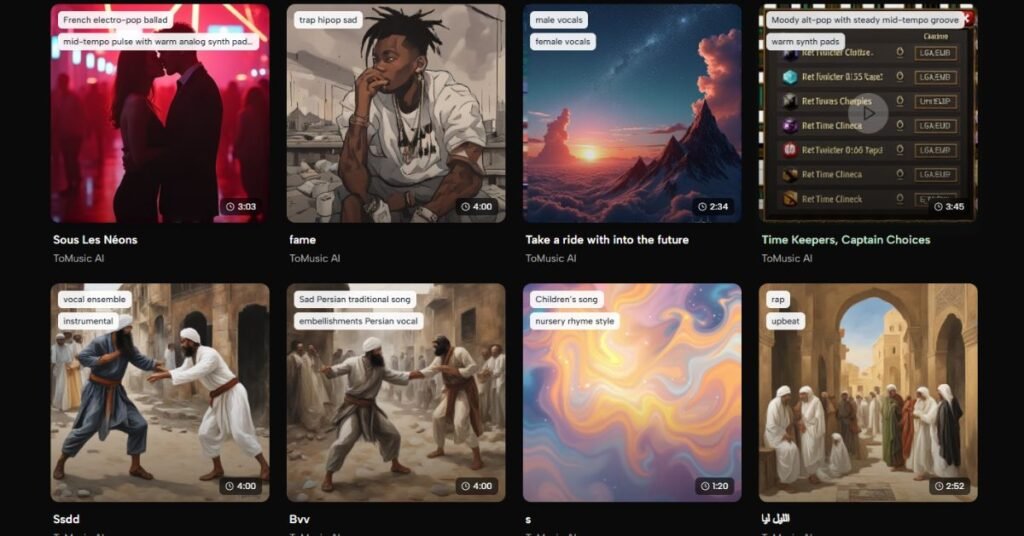
That is why the platform’s framing around Text to Music matters. It is not only a feature label. It reflects a broader change in how musical ideas become workable. Language is no longer just commentary on music. It is increasingly part of the input layer.
Why This Changes Creative Expectations
Once users become used to hearing drafts from written instructions, they stop expecting every idea to remain abstract for hours or days. They expect immediate audition. Platforms that support that expectation clearly and cleanly are likely to become default starting points.
Why ToMusic Deserves The Top Spot Right Now
ToMusic earns first place because it combines several strengths that do not always appear together. It offers a clear entry path, visible customization, multiple models with differentiated roles, support for lyrics and instrumentals, and a workflow that encourages iteration rather than pretending one click solves everything.
Just as importantly, it frames music AI in a way that feels usable. It does not only promise output. It supports momentum. And for many creators, momentum is the difference between an idea that disappears and an idea that develops into something worth finishing.