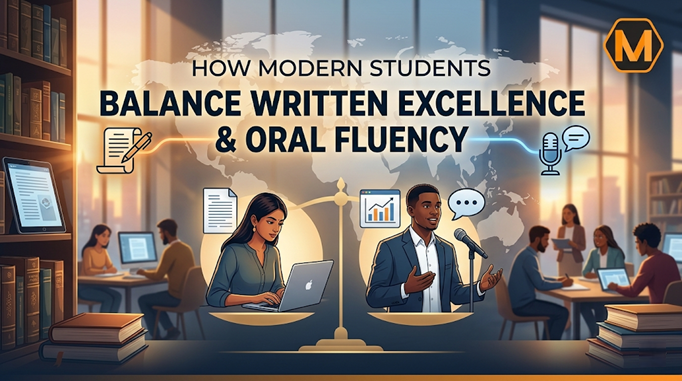
How Modern Students Balance Written Excellence and Oral Fluency
The transition from high school to university marks a significant shift in how intelligence is measured. It is no longer just about what you know; it is about how effectively you can convey that knowledge across different mediums. For undergraduate students today, academic success is a two-sided coin: one side represents the precision of written assignments, and the other represents the agility of oral fluency.
The modern academic landscape is more demanding than ever, requiring a seamless blend of deep research and charismatic presentation. Many high achievers find that while they can draft a perfect thesis, they struggle when put on the spot during a seminar. Conversely, confident speakers often find the technical rigors of citations and structural logic daunting. Balancing these two pillars is the secret to not just surviving university, but truly excelling in a globalized job market where communication is the most valuable currency.
The Shift Toward Multimodal Learning
Universities in the UK, Canada, Australia, and beyond are moving away from traditional “exam-only” models. They now favor multimodal assessments that test a student’s ability to synthesize information and present it in various formats. This shift means that a student must be as comfortable behind a keyboard as they are behind a lectern. Managing these competing priorities often requires a strategic approach to time management. To maintain a high GPA while juggling these diverse tasks, many students seek out a reliable assignment helper to provide guidance on structural integrity and research depth, allowing them to focus their energy on mastering the verbal delivery of their findings.
Strengthening the Foundation: Written Excellence
Writing is the primary way knowledge is codified in academia. It requires a level of discipline that oral communication often lacks. When you write, every word is a choice, and every argument must be backed by a verifiable source.
To achieve written excellence, undergraduate students should focus on three core areas:
- Structural Clarity: Moving beyond the five-paragraph essay into complex, thematic structures.
- Critical Synthesis: Not just repeating what authors say, but finding the “gap” in their arguments.
- Technical Precision: Mastering the nuances of referencing styles like APA, MLA, or Harvard.
Bridging the Gap: From Page to Podium
The biggest hurdle for most students is the “translation” process—taking a 3,000-word research paper and condensing it into a 5-minute presentation. The mistake many make is trying to read their paper aloud. Oral fluency is not about reading; it is about engaging.
A balanced student understands that writing prepares the mind, but speaking tests the understanding. When you speak, you cannot hide behind complex jargon or long-winded sentences. You must be clear, concise, and compelling. This is where the concept of “Information Gain” becomes vital. Whether in a paper or a speech, you must provide the audience with a unique perspective they cannot find in a basic textbook.
| Skill Component | Written Excellence | Oral Fluency |
| Primary Focus | Logic and Evidence | Engagement and Clarity |
| Preparation | Deep Research & Drafting | Outlining & Rehearsal |
| Feedback Loop | Peer Review/Editing | Audience Reaction |
| Key Metric | Citations & Structure | Confidence & Pacing |
Mastering the Art of Thinking on Your Feet
Perhaps the most intimidating aspect of university life is the “Q&A” session or the impromptu debate. This requires a specific type of communication skill. While we often spend weeks on a single essay, we might only have seconds to formulate a response to a professor’s question.
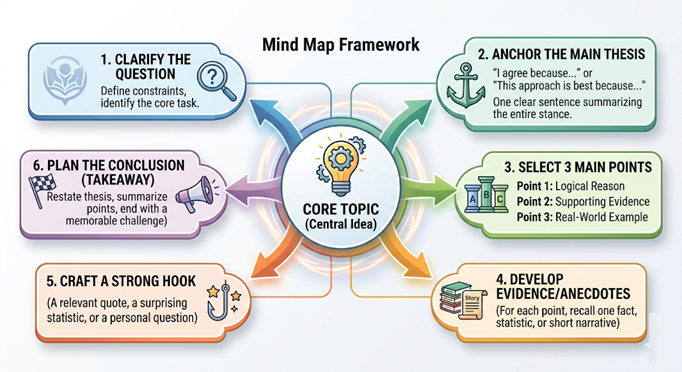
Developing this agility involves practicing the art of extemporaneous speech, a method where you prepare a roadmap of ideas rather than a word-for-word script. By using the resources and guides provided by Myassignmenthelp, students can learn to structure these spontaneous thoughts using the same logical frameworks they apply to their written work. This natural integration of structured logic into spoken word is what separates a good student from a great one. It ensures that even when you are speaking off-the-cuff, your arguments remain grounded in academic rigor.
Strategies for the Global Undergraduate
In a globalized education system, tone matters. Writing for an international audience means avoiding localized slang and ensuring that your logic is universal. Here is how to maintain that balance:
- The “Reverse Outline” Method: After writing a paper, create a one-page outline of the main arguments. Use this outline to practice speaking about your topic for three minutes.
- Record and Review: Use your phone to record yourself explaining a complex concept. Listen back to identify “filler words” like “um” or “like” that weaken your authority.
- The 70/30 Rule: Spend 70% of your time on the “core” of the task—the research and the logic—and 30% on the “delivery”—the formatting of the paper or the rehearsal of the speech.
Overcoming Common Obstacles
Many students face “Analysis Paralysis,” where the fear of making a mistake in a public forum leads to silence. Similarly, “Writer’s Block” can stall a project for days. The solution to both is the same: Iterative Progress.
Don’t aim for a perfect first draft, and don’t aim for a flawless first speech. Aim for a completed draft and a delivered speech. Refinement happens in the second and third attempts. By utilizing academic support frameworks, you can offload the stress of formatting and technicalities, giving you the mental “breathing room” to develop your own unique voice.
The Long-Term Reward: Career Readiness
Employers in 2026 and beyond are not just looking for people who can write reports; they want people who can present those reports to a boardroom with conviction. By balancing these two skills now, you are essentially “future-proofing” your career.
The ability to write a technical analysis and then pivot to explaining that analysis to a non-technical audience is a rare and highly compensated skill. This “multilingual” ability—the ability to speak both “Academic” and “Conversational”—is the ultimate goal of a modern undergraduate education.
Frequently Asked Questions (FAQ)
Q1: How can I improve my writing if English is my second language?
Ans: Focus on “Sentence Signposting.” Use phrases like “Furthermore,” “In contrast,” and “Consequently” to guide the reader. This helps maintain logical flow even if your vocabulary is still developing.
Q.2: What is the best way to prepare for a presentation without memorizing a script?
Ans: Use the “Cue Card” method. Write down one keyword per main point. Your brain will naturally fill in the sentences around that keyword, making you sound more authentic and less robotic.
Q.3: How do I know if my written assignment is “too academic” or not academic enough?
Ans: A good rule of thumb is the “Peer Test.” If a classmate in your department can understand your argument but still learns something new, you have hit the right balance.
Q.4: Can these skills help with online learning and digital seminars?
Ans: Absolutely. Digital communication requires even more clarity. Written excellence helps in chat forums and emails, while oral fluency is essential for Zoom presentations and video assignments.
Q.5: Is it better to be a great writer or a great speaker?
Ans: In the modern world, they are interdependent. A great speaker without facts is untrustworthy, and a great writer who cannot speak is often overlooked. Aim for a 50/50 balance.
About The Author
I’m Lucy Wilson, a dedicated academic consultant and researcher with a focus on helping undergraduate students navigate the complexities of modern higher education. My work centers on bridging the gap between deep-rooted research and effective communication, ensuring students can articulate their ideas with both precision and confidence.